


A ladybird with a dark side....
- Jan 11
- 1 min read
A ladybird with a dark side....
Canon EOS-5D mkIII canon MP-65mm 1-5x macro lens f/2.8. Manfrotto tripod. Flash etc
1/200s f/16 ISO160
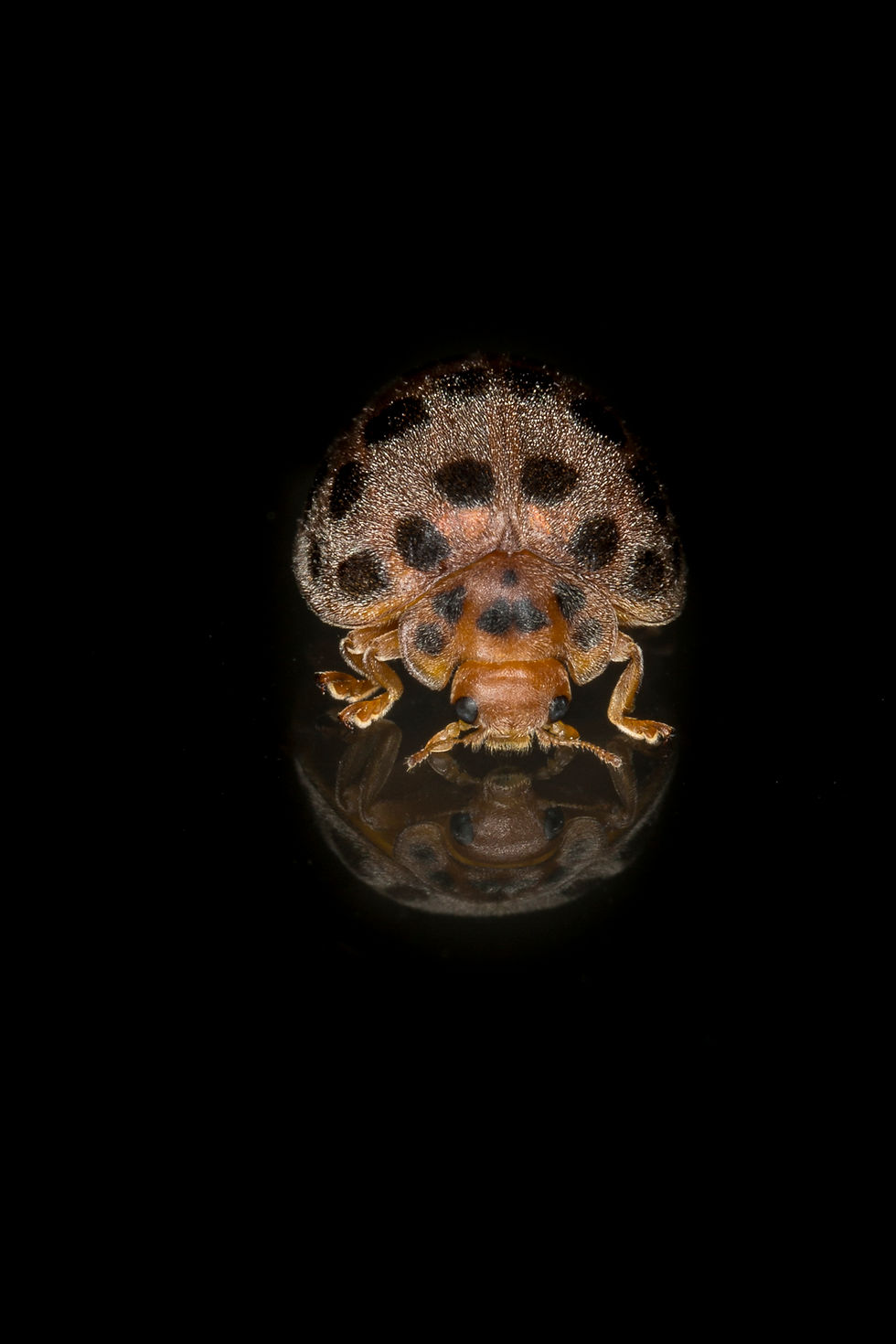
This ladybird flew onto my window at home, so I grabbed the opportunity to take a macro portrait, using a ring flash to blow out the background into a deep black, like a studio effect.Later, when researching the species, I found that this particular ladybird does have a dark side.
Normally farmers and gardners welcome these insects, as most ladybird beetles are predators on pests, like small sap sucking soft body insects, like aphids.
But this particular species - Henosepilachna vigintioctomaculata - commonly known as the 28-spotted potato ladybird, or the Hadda beetle feeds on plants, in both the larvae and adults stage. They have 13 black spots on each wing cover, and two spots on thorax, for a total of 28-spots in total.
Normally the larvae feeds on the lower surface of the plants, whilst the adults feed on the upper surface of leaves, often making holes as they chew, and these attacks can cause the death of seedlings. They are particularly fond of plants in the Cucurbitaceae and Solanaceae families, including zucchini, pumpkin, cucumbers, melons, potato, and tomato.
The adults are like typical ladybird beetles with wing cases of dull orange and black spots; however, close inspection shows that the upper surface is covered in short downy hairs. This distinguishes plant-feeding ladybird beetles from their beneficial bug-feeding relatives.
Location: Sha Kok Mei, Sai Kung, New Territories, Hong Kong.
Comments